01
Wire / hand soldering & automation
Solder wire
Lead-free and leaded wires in 0.3–3.0 mm diameters, with customized flux content and spool sizes for repeatable joints.
View solder wire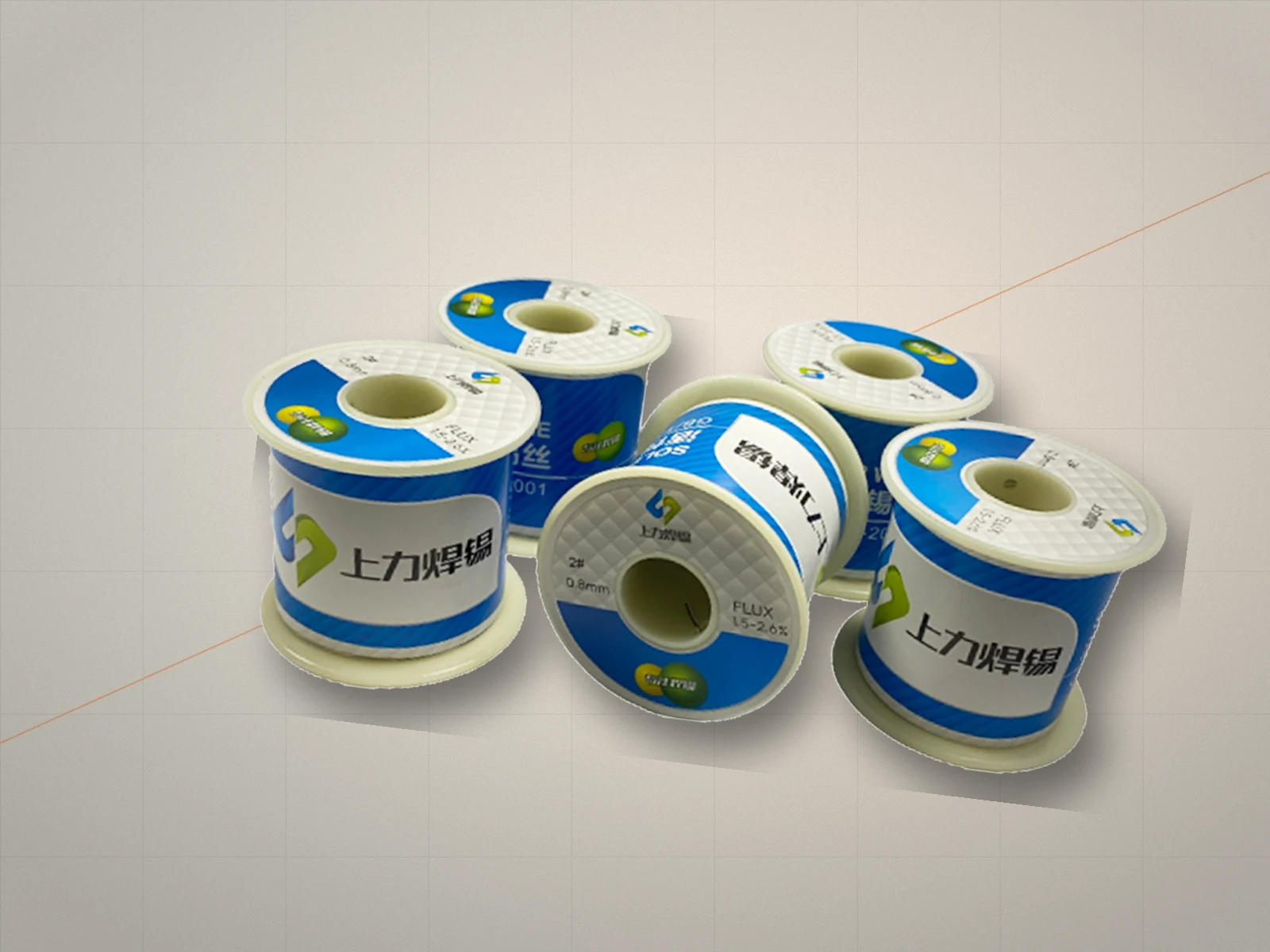 0.3–3.0 mm · SnPb / SnCu / SAC
Solder materials / Shanghai, China
Solder wire, bars and paste for PCB assembly, automotive electronics, appliances and repair. Choose the alloy, flux and packaging around your process.
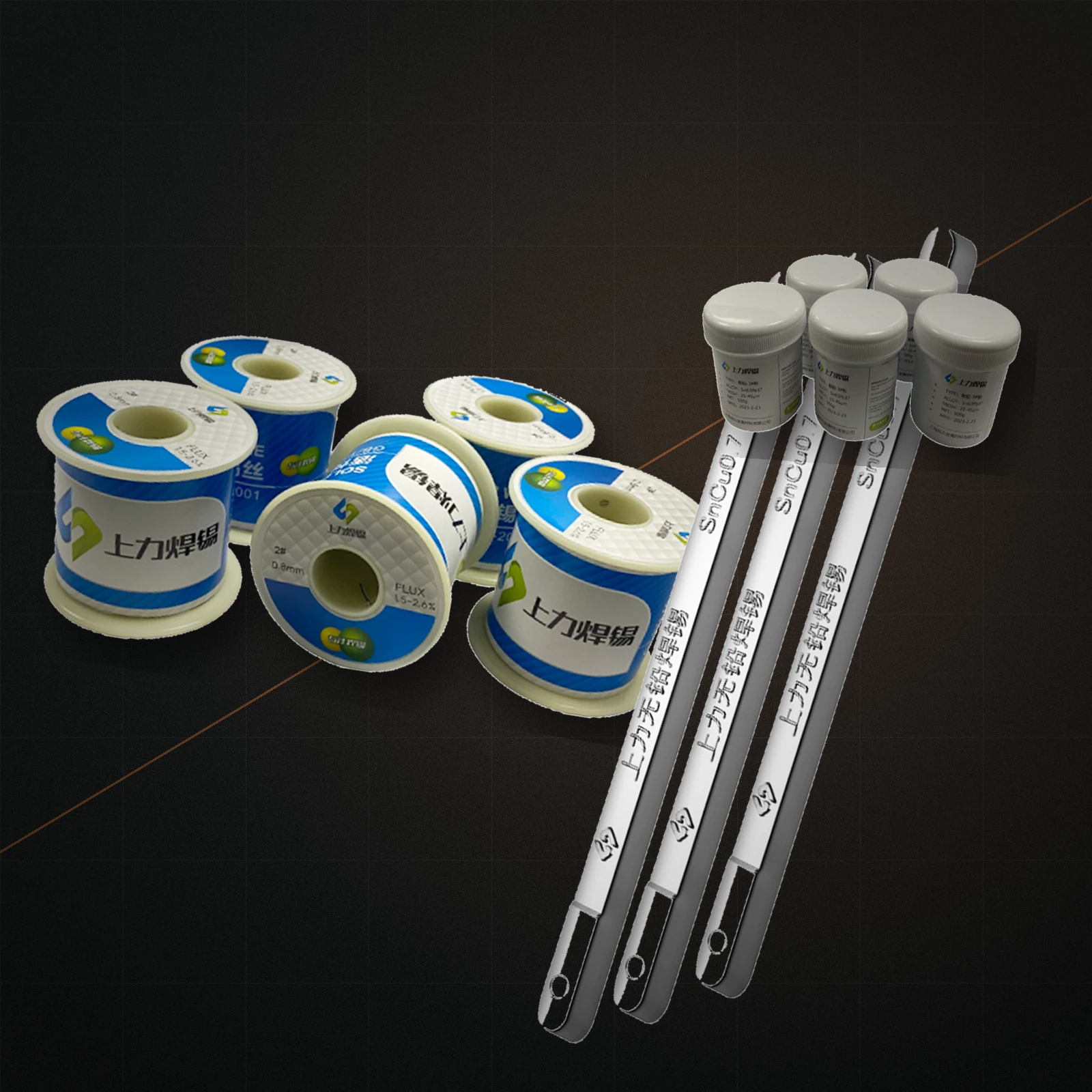
Product families
Match the solder format to your joint, equipment and production volume. Every product family can be reviewed by alloy, melting range and packaging.
Wire / hand soldering & automation
Lead-free and leaded wires in 0.3–3.0 mm diameters, with customized flux content and spool sizes for repeatable joints.
View solder wire
0.3–3.0 mm · SnPb / SnCu / SACBars / wave soldering & tinning
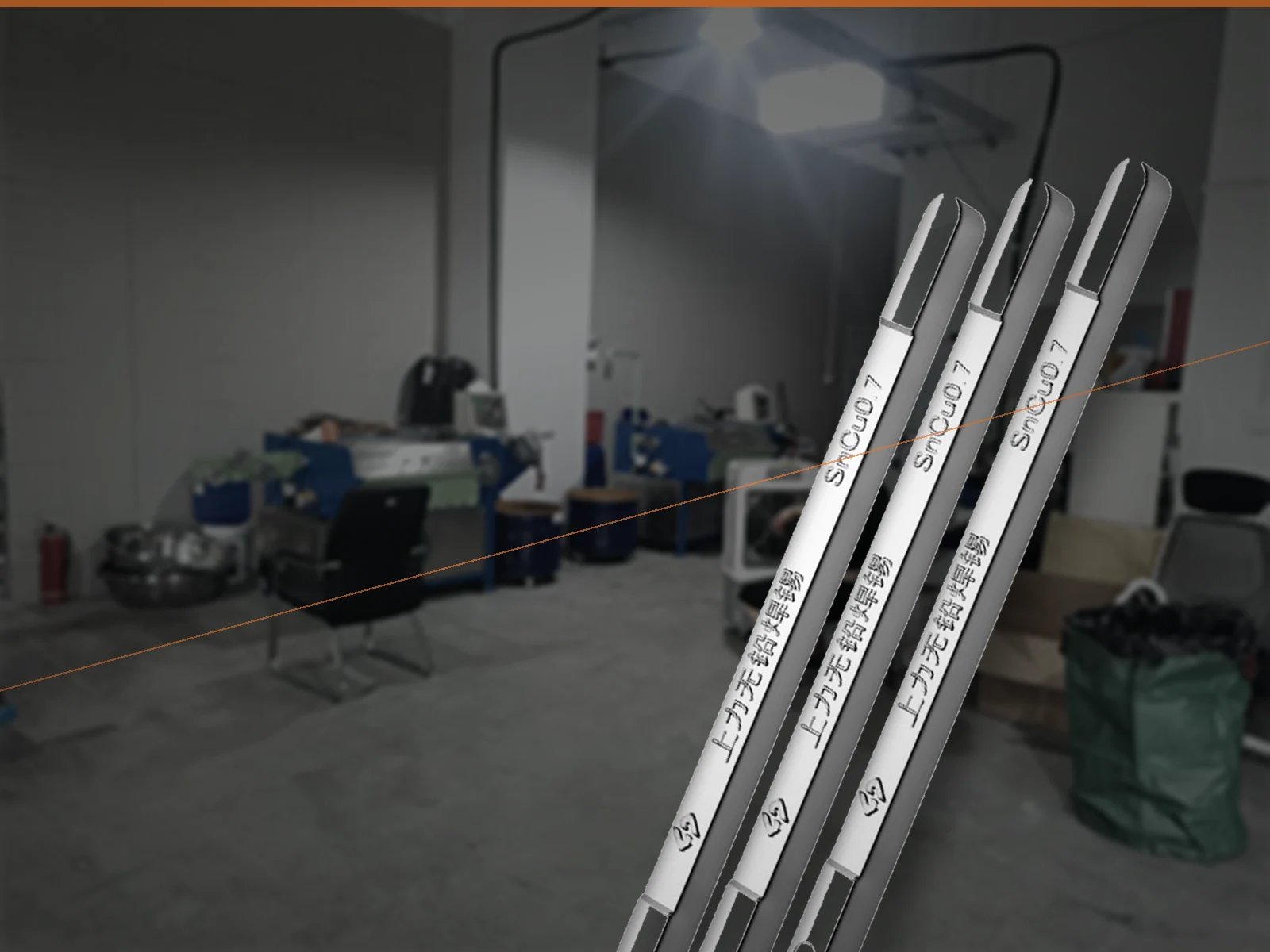
Low-oxidation bars for wave soldering, bath maintenance and tinning. Choose common SAC, tin-copper or tin-lead compositions.
View solder bars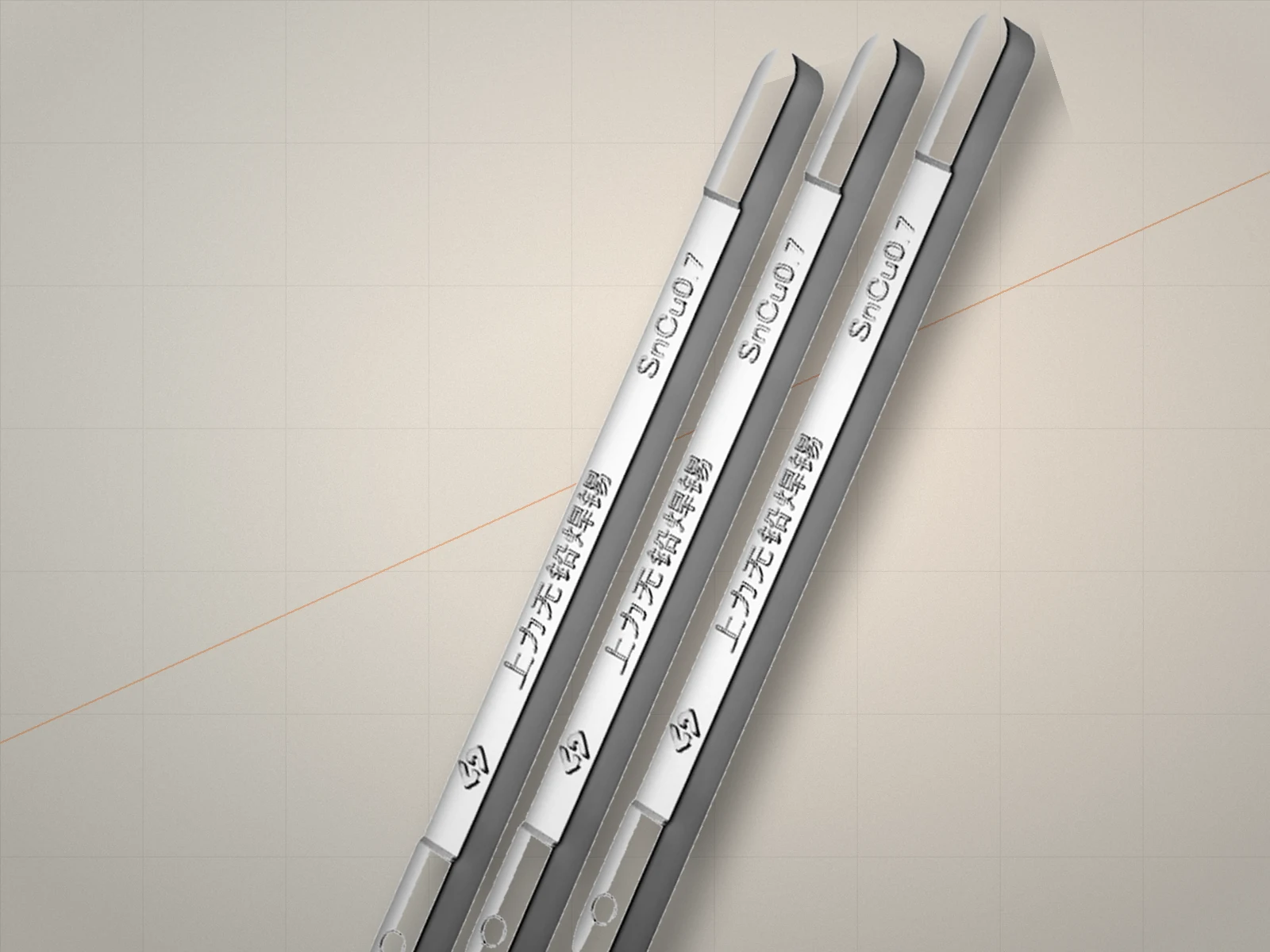 SnCu0.7 · SAC305 · Sn63Pb37
Paste / SMT & reflow
Low-, medium- and high-temperature pastes with controlled powder size for consistent deposition and reflow.
View solder paste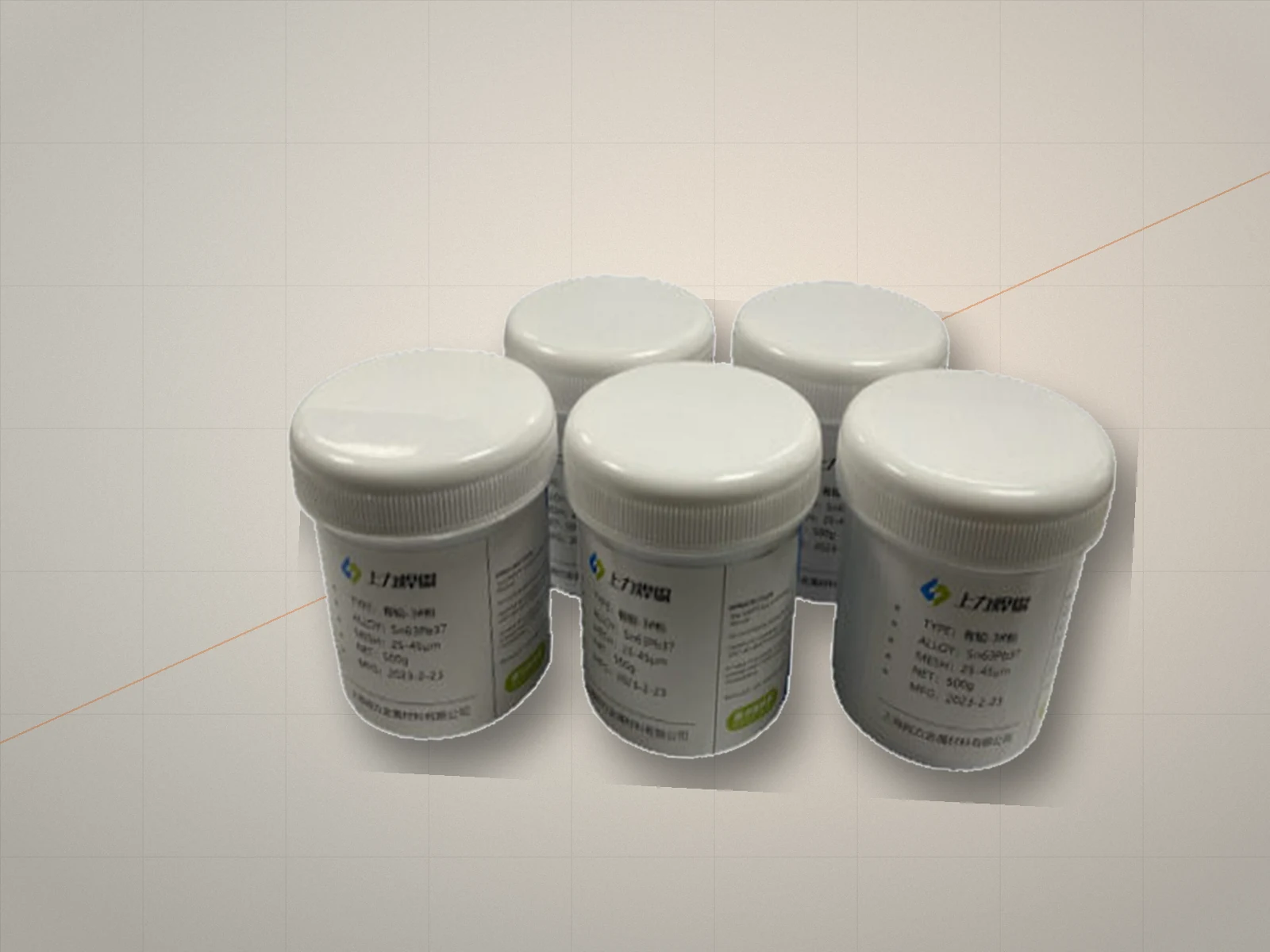 138–217°C · 20–45 μm powder
Applications
The right solder balances alloy, melting point, flux activity, cleaning requirements and production speed. Start with the application.
Discuss your applicationWire, paste and bar formats for reflow, wave soldering and rework.
Alloy and flux selection for thermal cycling, connectors and high-reliability joints.
Production-ready materials for control boards, wiring and electrical assemblies.
Practical wire and paste options with clear alloy labeling for technicians.
Alloy guide
Common production alloys are shown below. Final selection depends on board finish, component limits, cleaning process and required joint properties.
| Alloy | Melting point | Typical format | Use direction | Lead status |
|---|---|---|---|---|
| Sn99.3Cu0.7 | 227°C | Wire, bar | General electronics and cost-conscious lead-free assembly | Lead-free |
| Sn99Ag0.3Cu0.7 | 221°C | Wire, bar, paste | Balanced wetting and thermal performance | Lead-free |
| Sn96.5Ag3.0Cu0.5 | 217°C | Wire, bar, paste | High-reliability electronics and demanding thermal cycles | Lead-free |
| Sn63Pb37 | 183°C | Wire, bar, paste | Precision work where leaded alloy is permitted | Leaded |
| Sn60Pb40 | 183–190°C | Wire, bar | General electronics and repair | Leaded |
| Sn99.95 | 232°C | Bar | Plating, tinning and solder bath adjustment | Pure tin |
Specifications are supplied for discussion and must be confirmed against the approved product data sheet before production.
Process & quality
Share your application, equipment, alloy target, joint requirements and annual volume.
Align alloy, flux, diameter, spool or bar size, labels and documentation.
Evaluate wetting, residue, appearance and compatibility with your process.
Confirm the approved specification before the production run and export packing.
Technical resources
Replace scattered links and broken downloads with a structured technical library as the approved documents become available.
Compare melting points and common applications before requesting a sample.
Guide / 02Compare melting, process compatibility and where each alloy direction fits.
Export / 03Review sample, packaging and export requirements for buyers across the region.
RFQ / sample request
Send the product format, alloy or operating temperature, estimated quantity and destination country. We will come back with the next practical step.
Start your inquiry