

Here company video for your reference. https://youtu.be/7-8VR_dloZo
Download below link to know our projections.
| Item | Spec. | Alloy Composition/WT% | Melting ℃ | Density | Diaø | Application |
| Lead solder wire | 63A Tin Wire | Sn63-Pb37 | 183° | 8.4g | 0.3-3mm | Relatively high requirements: high precision instruments, electronics Industrial, circuit board (high requirements), communication, micro technology, aviation industry and other welding. |
| 1# Tin Wire | Sn60-Pb40 | 183°-190° | 8.5g | 0.5-3mm | ||
| 2# Tin Wire | Sn55-Pb45 | 183°-203° | 8.7g | 0.5-3mm | ||
| 3# Tin Wire | Sn50-Pb50 | 183°-216° | 8.9g | 0.8-3mm | Relatively common requirements: home appliances, electrical instruments, General requirements for circuit board) Welding of automotive electrical appliances, general hardware electrical appliances, etc. | |
| 4# Tin Wire | Sn45-Pb55 | 183°-227° | 9.0g | 0.8-3mm | ||
| 5# Tin Wire | Sn40-Pb60 | 183°-238° | 9.3g | 0.8-3mm | ||
| 6# Tin Wire | Sn35-Pb65 | 183°-247° | 9.5g | 0.8-3mm | Relatively Pricerite requirements: general mechanical welding, car water tank, light bulbs, cable joints and other welding. | |
| 7# Tin Wire | Sn30-Pb70 | 183°-255° | 9.7g | 0.8-3mm | ||
| 8# Tin Wire | Sn25-Pb75 | 183°-266° | 9.9g | 0.8-3mm |
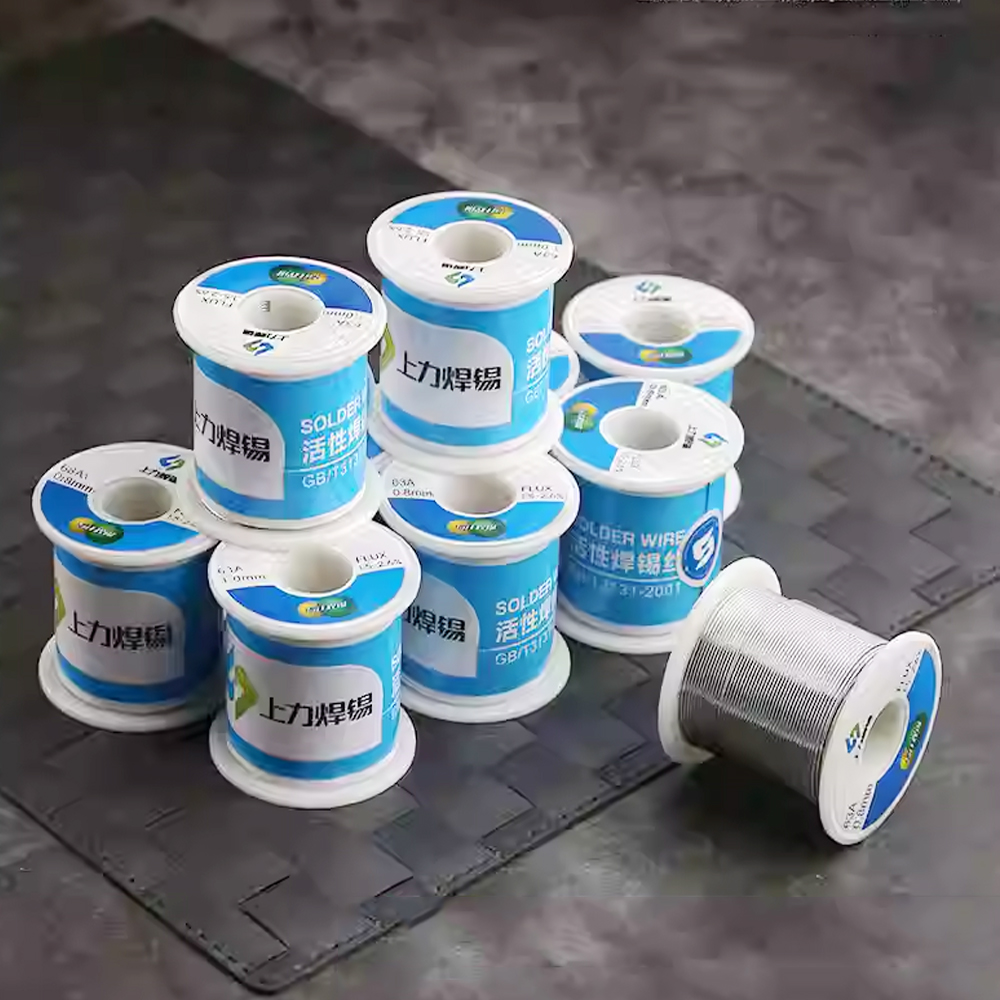
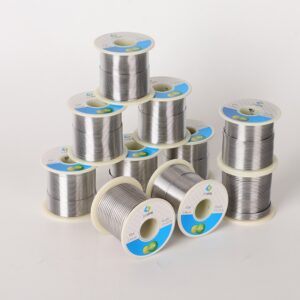
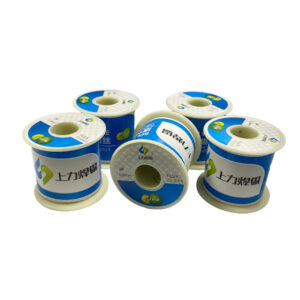
| Product name | Tin Solder Wire |
| Melting Point | 183~266℃ customizable |
| Flux Content | 1.5%~2.6% (Customized) |
| Diameter | 0.3mm 0.5mm 0.8mm 1.0mm 1.2mm 2.0mm customizable |
| Package | 10 rolls/carton, 5 cartons/box, 50 boxes/pallet |
| Weight | 50g,450g,800g,1000g,customizable |
| Quality | Full, Bright Welding Spots, High Reliability, very Clean without residual Impurities,less oxide |
| Compatibility | For Automatic Soldering Machine, Fast Welding Speed, very Smooth |
| Performance | No Cleaning, Insulation Resistance Meets IPC-TM-650 International Standard |
| Application | Military Industry, Precision Electronic Instruments, Precision Medical Instruments, High-End Electronic Products, Automotive Electronics and other Products of Manual Dip Welding and Wave Soldering |
| Commitment | Use 100% Raw Materials |
Lead Solder Wire: An Overview
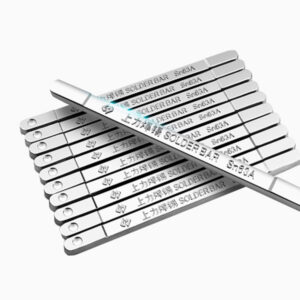
Lead solder wire is another key material used in the electronics industry. Just like lead solder bars, solder wire helps create strong and reliable connections between electronic components. It is made from a mixture of tin and lead.
Key Features
To start, lead solder wire is flexible and easy to manipulate. This flexibility allows users to solder in tight spaces where bars might not fit. Additionally, the wire melts quickly when heated, enabling efficient soldering.
Moreover, it provides great electrical conductivity, which ensures that devices function properly. Many manufacturers trust its effectiveness and cost-efficiency in achieving good solder joints.
Applications
You will find lead solder wire used in:
- Electronics: It is popular for soldering jobs on circuit boards and for connecting various components.
- Repair Work: Hobbyists and technicians often use it for repairs, as it is easy to apply.
- Prototyping: Engineers use lead solder wire to quickly prototype devices and test different designs.
Conclusion
In conclusion, lead solder wire is a vital component in many industries. Its flexibility, quick melting, and excellent conductivity make it an excellent choice for soldering. Therefore, it remains an essential material in the production and repair of electronic devices.
Reviews
There are no reviews yet.